Green Water Needs More Than Shock Treatment
Algae Treatment in Independence for pools showing green, cloudy, or discolored water that won't clear with standard maintenance
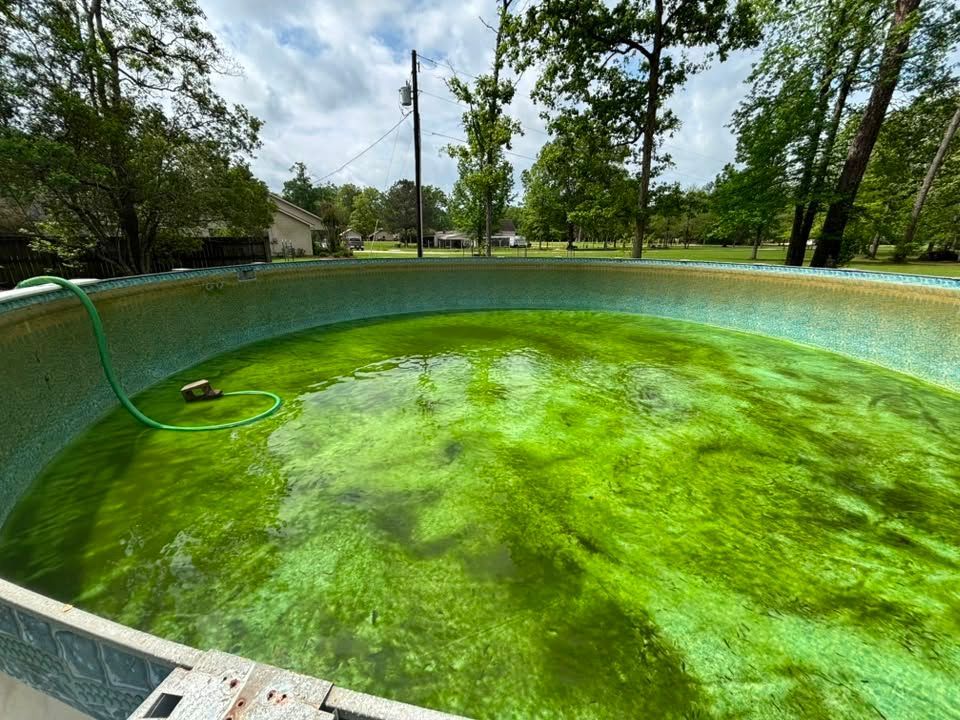
JUS'POOLIN provides algae treatment in Independence for pool owners dealing with visible growth that has changed the color, clarity, or usability of their water. Green, yellow, or black discoloration along walls and floors signals that algae has established itself in the water chemistry and on pool surfaces. Louisiana's combination of high summer temperatures, humidity, and extended swimming seasons creates conditions where algae can take hold quickly when chemical balance shifts even slightly.
Addressing an algae problem starts with identifying what type of growth is present and where it has spread. Green algae typically clouds the water and coats surfaces, while black algae embeds into plaster and vinyl, making surface contact treatment a necessary part of any response. Treatment involves adjusting water chemistry, targeting affected surfaces directly, and filtering out dead material as conditions return toward normal. Skipping surface treatment and relying only on shock dosing often results in regrowth within days, particularly during Louisiana's warm months when pool water stays near optimal temperatures for algae reproduction.
Schedule an algae assessment with JUS'POOLIN when discoloration first appears, before the growth spreads further across pool surfaces.
How Algae Affects Water, Surfaces, and Usability
Algae growth does more than change how water looks. As it spreads across walls, steps, and floor surfaces, it creates a slippery film that makes the pool unsafe to use and difficult to clean without targeted treatment. Suspended algae in the water column reduces visibility and places added strain on filtration equipment as the system attempts to clear particles it isn't designed to handle in large volumes.
After treatment is completed, you'll notice water that begins transitioning from green or murky back toward clear, with surface discoloration visibly reduced as dead material is vacuumed and filtered out. Walls and steps that were coated with slippery growth return to their normal texture and color once the treatment cycle runs its course. The pool becomes safe to enter again once water chemistry readings confirm the treatment has taken effect.
Louisiana's wet weather introduces phosphates and organic debris into pool water regularly, which serve as nutrients that support algae growth when chlorine demand spikes and residual levels drop. This is why treatment isn't simply about adding more product—it requires removing the conditions that allowed growth to establish in the first place. Depending on how far the growth has progressed, multiple treatment steps may be needed before water clarity fully returns.
Common Questions About Pool Algae Treatment
Pool owners in Independence often have specific questions about what to expect during and after algae treatment. The answers below cover the most frequent concerns.
What causes algae to appear even when the pool looks maintained?
Algae growth typically starts when chlorine residual drops below effective levels, often triggered by heavy rain diluting the water, high bather load, or extended sun exposure that burns off chlorine faster than it's replenished—all common conditions during Louisiana summers.
How does treatment differ from simply adding shock to the pool?
Shock raises chlorine to kill suspended algae, but treatment also involves brushing affected surfaces to break the algae's grip, targeting walls and steps with appropriate products, and running filtration continuously to remove dead material from the water.
When is the pool safe to use after algae treatment?
You can safely return to the pool once water chemistry readings—specifically chlorine level, pH, and cyanuric acid—fall within acceptable ranges, which varies depending on how severe the algae growth was before treatment began.
Why does algae come back after it appeared to clear up?
Regrowth typically happens when the root cause isn't addressed, such as a persistent chemistry imbalance, inadequate filtration run time, or phosphate levels in the water that were never reduced after the initial treatment.
What visible signs indicate that treatment has worked?
Water that shifts from green or cloudy to clear blue, walls and floor surfaces that no longer feel slippery or show visible discoloration, and a filtration system running without unusual strain are all observable indicators that treatment is progressing correctly.
JUS'POOLIN is available to evaluate pool conditions and walk through the appropriate treatment steps based on what's actually visible in the water and on pool surfaces. Connect with the team at (985) 379-9834 to arrange a pool evaluation.