
Pool Chemistry Decisions That Start With Testing
Water Testing in Independence for pools showing cloudiness, irritation, or chemical imbalance after rain or extended heat
Treating pool water without first testing it means adding chemicals based on guesswork—sometimes the right call, often not, and occasionally the opposite of what the water actually needs. JUS'POOLIN provides water testing for pool owners in Independence who want to understand current water conditions before making any treatment decisions. The service is particularly relevant when water appearance has changed, when swimmers have reported discomfort, or when the pool has been through a weather event that's likely shifted its chemical balance.
Louisiana heat and heavy rain create two distinct challenges for water balance. High summer temperatures accelerate chlorine consumption, drive pH upward through off-gassing, and increase evaporation that concentrates dissolved minerals over time. A significant rain event does the opposite in some respects—it dilutes total alkalinity and calcium hardness, shifts pH in ways that depend on local rainfall chemistry, and adds phosphates and organic material from runoff. Testing evaluates the key parameters that govern how the water behaves: pH, total alkalinity, calcium hardness, chlorine residual, and cyanuric acid level each interact with the others in ways that make single-factor treatment ineffective when multiple factors are out of range simultaneously.
Arrange a water testing appointment when you notice a change in water color, swimmer comfort, or chemical consumption that doesn't match your recent treatment history..
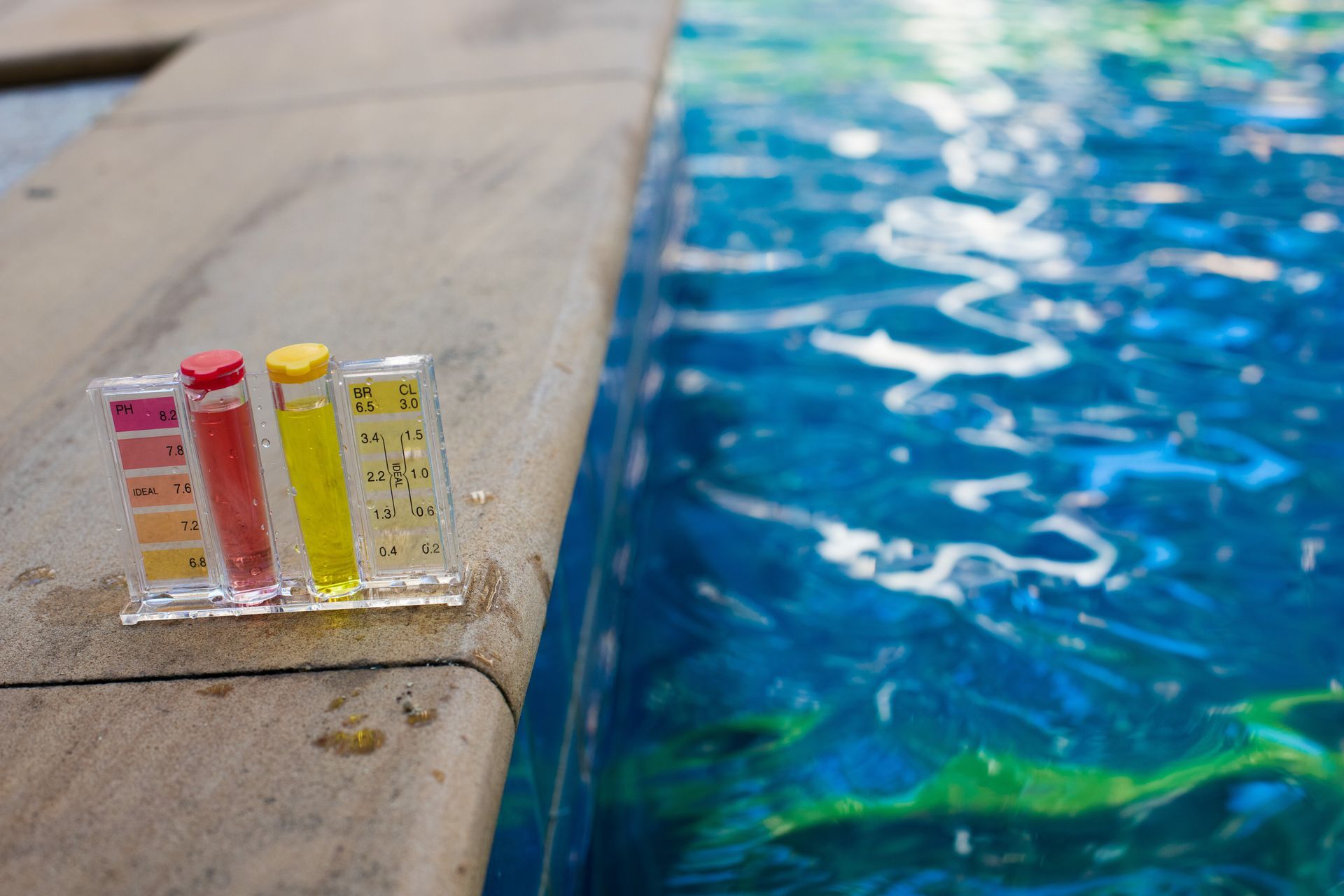
Why Testing Comes Before Treatment Decisions
Water testing produces a reading of current conditions across multiple parameters rather than a single number, and the relationship between those parameters matters as much as any individual value. Total alkalinity acts as a buffer that stabilizes pH; when alkalinity falls below the functional range, pH becomes difficult to hold steady regardless of how much pH adjuster is added. Calcium hardness below target allows water to pull minerals from plaster surfaces—a process that's invisible until pitting or etching becomes visible on the pool floor. Testing identifies where each parameter stands before treatment is chosen, which determines both what product is appropriate and at what dose.
After testing and any treatment that follows, you'll notice that chlorine holds its residual longer between additions, that water clarity improves without a haze that persists after shocking, and that surfaces feel smooth rather than rough or scaling. JUS'POOLIN uses test results to inform what the water actually needs rather than applying a standard treatment package to every pool regardless of current conditions.
Cyanuric acid concentration is one parameter that receives less attention than pH or chlorine but has a significant practical effect in outdoor pools: when cyanuric acid is too high, chlorine becomes measurably less effective at the sanitizer levels that are otherwise adequate—a condition sometimes called chlorine lock, where test kits show chlorine present but the water doesn't respond as expected. Pools in Independence that rely on stabilized chlorine tablets as their primary sanitizer are more likely to reach elevated cyanuric levels over a long season, making periodic full-panel testing more useful than single-parameter checks..
Questions Homeowners Ask About Pool Water Testing
Water testing questions often come up when something has visibly changed in the pool or when a treatment hasn't worked as expected. The following covers what pool owners in Independence ask most often.
What parameters does a water test evaluate?
A comprehensive test covers pH, total alkalinity, calcium hardness, free chlorine, combined chlorine, and cyanuric acid—each of which affects how the water interacts with swimmers, equipment surfaces, and other chemicals in the system.
How does heavy Louisiana rainfall change pool water chemistry?
Significant rain dilutes alkalinity and calcium hardness, introduces phosphates and organic material from surface runoff, and can shift pH depending on the acidity of local precipitation—making post-storm testing a practical rather than precautionary step.
Why does chlorine sometimes seem ineffective even when the reading shows it's present?
Elevated cyanuric acid levels reduce chlorine's sanitizing effectiveness at normal residual concentrations, a condition that's identifiable through testing and not resolvable through additional chlorine addition alone.
How often should pool water be tested during the swimming season?
In Independence's climate—with sustained heat, frequent rain, and high evaporation—testing more frequently than once monthly helps catch shifts before they compound, particularly after storm events or extended periods of heavy pool use.
What should I do before bringing a water sample in for testing?
Collect the sample from elbow depth at the deepest end of the pool, away from return jets, after the pump has been running for at least an hour—this produces a reading that reflects the body of water rather than a localized condition near the surface or a return line.
JUS'POOLIN can test your water and walk through what the results indicate about current conditions before any treatment is applied—call (985) 379-9834 to set up a testing visit.