
Circulation Problems That Start at the Pump
Pool Pump Repair, Maintenance & Replacement in Independence for unusual noise, loss of prime, or weak system circulation
A pool pump that labors, leaks, or fails to prime affects every other part of the system—water stops moving, filtration stalls, and chemistry shifts faster than normal treatment cycles can address. JUS'POOLIN provides pump repair, maintenance, and replacement for pool owners in Independence whose systems are showing signs that the pump is no longer operating as it should. The work covers troubleshooting to identify what's actually happening mechanically before any repair or replacement decision is made.
Pump problems show up in recognizable ways: a grinding or shrieking sound during operation often points to bearing wear inside the motor; a wet pad beneath the pump housing typically indicates a shaft seal failure or impeller housing crack; a pump that runs but pulls weak suction may have an air leak on the intake side or a partially blocked impeller. None of these symptoms confirm a specific cause without inspection, because each can have more than one origin. Routine maintenance—cleaning the strainer basket, checking impeller clearance, and inspecting the seal plate—addresses the components most likely to wear under continuous seasonal use before they create a larger failure.
Request pump service to have your system evaluated and get a clear picture of what repair or maintenance your pump actually needs.
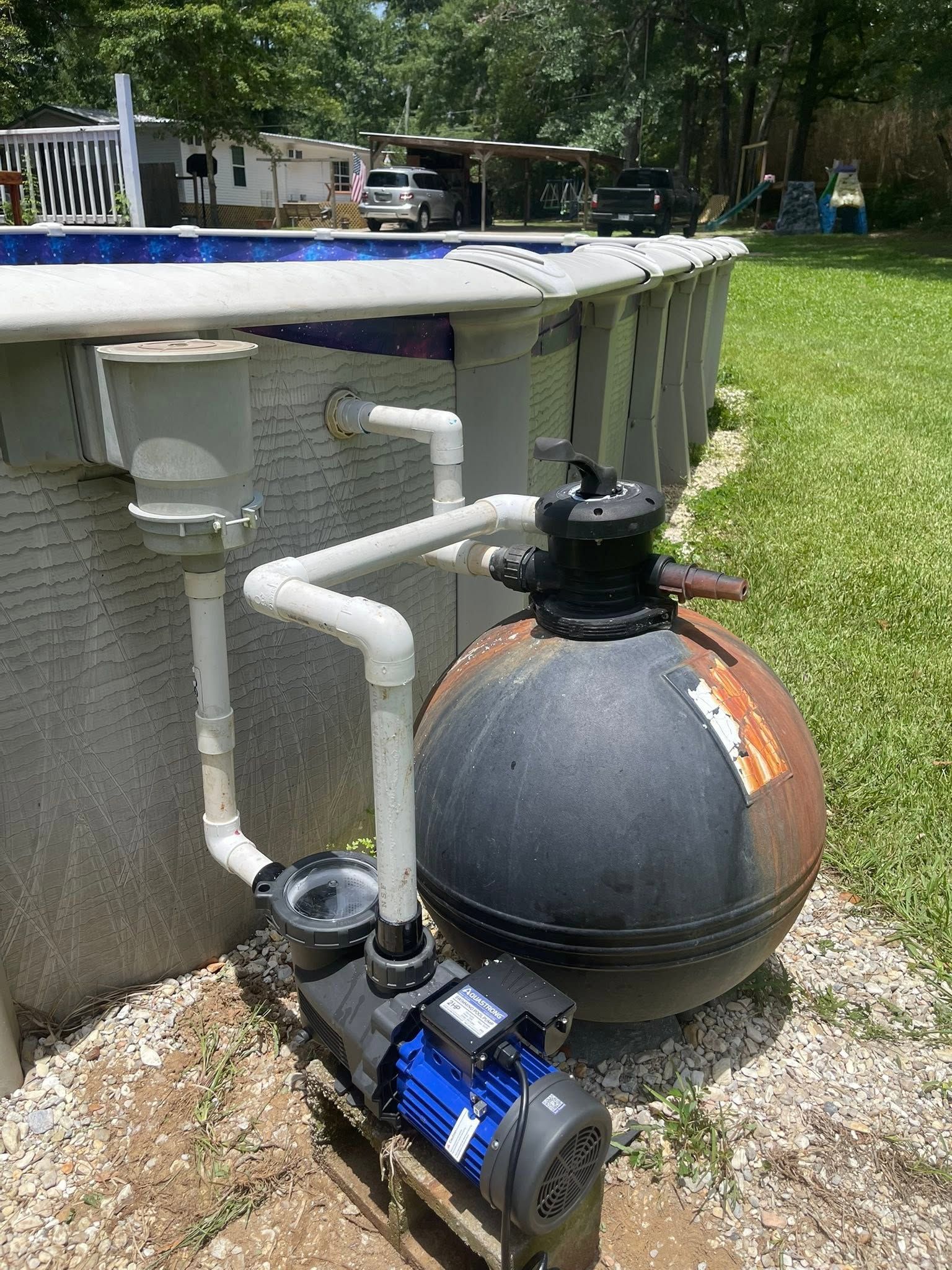
How Pump Service Addresses Circulation Failures
A pump inspection covers the motor, impeller, shaft seal, strainer housing, and the suction and discharge plumbing connections accessible at the equipment pad. The goal during that inspection is to separate symptoms from causes—a pump losing prime, for example, can result from a cracked lid O-ring, a loose union fitting, or a blocked skimmer line, and each of those requires a different fix. Skipping that diagnostic step and replacing components based on symptoms alone leads to work that doesn't resolve the underlying problem.
Once service is complete, you'll notice return jets pushing water with consistent force, the pump running without abnormal vibration or noise, and the strainer basket filling with debris rather than staying empty—which confirms suction is functioning across the system. JUS'POOLIN carries that evaluation through to the repair or replacement recommendation, rather than presenting both options without a clear basis for choosing between them.
Replacement becomes the appropriate direction when motor windings have failed, when the volute housing is cracked, or when a pump is significantly undersized for the pool volume it's trying to turn over. In Independence's climate, where pools operate through most of the calendar year, pump components accumulate run hours faster than in shorter-season regions—making both maintenance intervals and replacement timing worth tracking against actual use rather than calendar date alone.
What Owners Ask Before Pump Service
Pump problems tend to raise similar questions regardless of the symptom that triggered the call. The answers below reflect the most common situations that come up during pump evaluations in this area.
Why is my pump making a high-pitched noise it didn't make before?
A screaming or grinding sound during operation is typically associated with motor bearing wear, which progresses over time and eventually leads to motor failure if left unaddressed.
What causes a pool pump to lose prime and run dry?
Air entering the suction side of the system—through a cracked lid, a deteriorated O-ring, or a loose union fitting—prevents the pump from maintaining water flow through the volute, causing it to spin without moving water.
How does Louisiana's extended pool season affect pump wear?
Pumps in Independence run more annual hours than those in northern climates, which compresses the effective service life of bearings, seals, and impellers relative to manufacturer estimates based on shorter seasonal use.
When is repairing a pump the right choice versus replacing it entirely?
Repair makes practical sense when the failure is limited to a single serviceable component—a seal, an impeller, or a capacitor—while replacement is typically the better direction when the motor has failed or the housing is structurally compromised.
How often should routine pump maintenance be performed?
Strainer basket cleaning should happen on a regular schedule tied to debris load; seal and impeller inspection fits naturally into seasonal startup and mid-season checkpoints, particularly after heavy storm events that drive debris into the system.
JUS'POOLIN is available to evaluate your pump's current condition and walk through what service, repair, or replacement would address the specific problem you're seeing—call (985) 379-9834 to set up an appointment.