When Cloudy Water Signals a Filter Problem
Filter Cleaning & Replacement in Independence for reduced circulation, cloudy water, or post-storm debris overload
Louisiana's long pool season creates sustained demand on filtration equipment that most other climates simply don't produce, and Independence pools face a concentrated version of that pressure—oak pollen, pine needles, frequent storm debris, and months of near-continuous use all moving through the same filter media. JUS'POOLIN provides filter cleaning and replacement services for pool owners dealing with visible water clarity problems or circulation that has noticeably weakened. When a filter can no longer move debris efficiently through the system, every other part of pool maintenance becomes harder to manage.
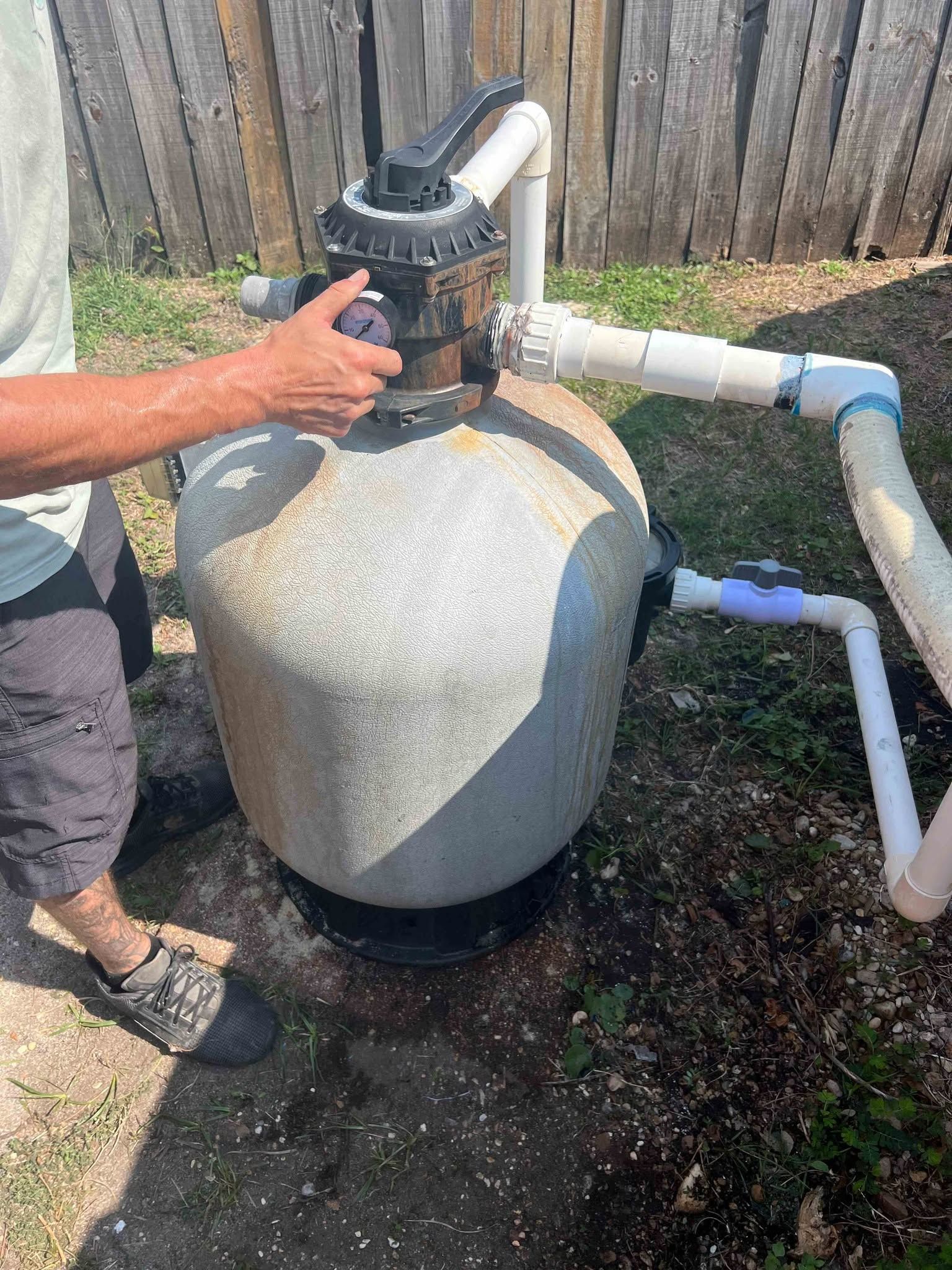
During a filter service visit, the filter housing is opened and the internal components—whether cartridge, sand, or DE grids—are inspected for physical condition before any cleaning begins. That inspection step matters because cleaning a filter element that has already developed tears, channeling, or compaction beyond recovery simply delays the problem rather than solving it. When components are still serviceable, thorough cleaning restores flow rate and debris-holding capacity. When wear or damage limits what cleaning can accomplish, replacement of the affected components is the appropriate next step, and that decision is made based on what the filter actually shows rather than a default schedule.
Schedule a filter evaluation to determine whether your current filter components are performing at the capacity your pool requires.
What Proper Filter Service Actually Requires
Effective filter service involves more than rinsing debris off a cartridge. The process includes checking pressure differential readings before and after cleaning to verify that flow restriction has genuinely improved, inspecting O-rings and housing seals for deterioration that would allow bypass flow, and confirming that the filter is correctly sized for the pump's output rate. An undersized filter will reach maximum debris load quickly—a common issue in pools that run through Louisiana's high-debris seasons without mid-season servicing.
After a completed filter service, you'll notice water that moves more consistently through return jets, a pressure gauge that holds within a normal operating range rather than climbing steadily, and surface clarity that improves as the filtration cycle catches particles it was previously passing through. Weak return flow and persistent cloudiness—even after chemical treatment—are the two most reliable signs that the filter rather than chemistry is the limiting factor.
Filter type affects how service is carried out: cartridge filters require physical cleaning and periodic element replacement; sand filters need backwashing and sand replacement on a longer cycle; DE filters involve backwashing and recharging with diatomaceous earth after each cleaning. Each type has a different service interval, and pools in this region—running through spring pollen loads and summer storm seasons—often reach those intervals faster than manufacturer estimates written for moderate climates suggest.
Common Questions About Filter Service
Pool owners in Independence often have questions about what filter service involves and how to recognize when it's needed. The following covers the situations that come up most frequently.
What are the clearest signs that a pool filter needs service?
Cloudy water that doesn't respond to chemical treatment, a pressure gauge reading significantly above the clean baseline, and noticeably weak return jet flow are the three most observable indicators that filter performance has dropped.
How does Louisiana weather affect how often filters need attention?
Heavy rain events wash surface debris, sediment, and organic material into pool water in concentrated amounts, which can load a filter to capacity faster than normal evaporation-based water loss would—making post-storm inspection a practical habit rather than an optional one.
When should a filter element be replaced rather than cleaned?
When cartridge pleats show tears, when DE grids have visible cracking, or when a sand bed has developed channeling that prevents even particle distribution, cleaning will not restore normal filtration and replacement of the affected media or element is the appropriate response.
Why does filter size matter relative to the pump?
A filter rated for lower flow than the pump produces will reach its dirt-holding capacity quickly and require more frequent servicing; matching filter surface area to pump output is a sizing decision that affects how long clean intervals last.
How should I prepare before scheduling a filter service appointment?
Running the pump at its normal setting so pressure gauge readings reflect current operating conditions gives the technician useful baseline information before the housing is opened.
JUS'POOLIN is available to inspect your filter condition and confirm whether cleaning or component replacement is the right course for where your system currently stands—connect by calling (985) 379-9834 to arrange a visit.